
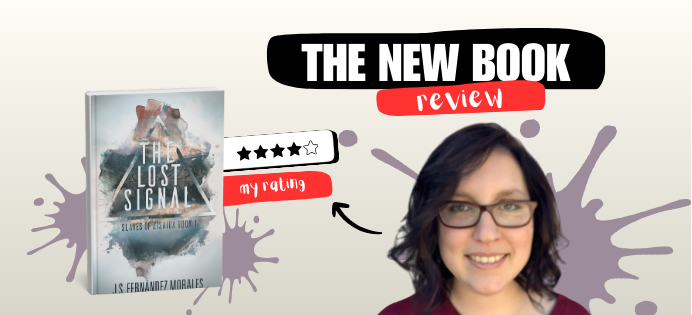

When Earth is visited by an advanced extraterrestrial species warning of an ancient force bent on annihilation, humanity is thrust into an impossible position. Do they take their message at face value? Do they trust the very beings who arrive uninvited, or do they even have a choice?
At a secured military base, a small group of leaders must decide whether to align themselves with these visitors in preparation for a war that could end everything. Their decision becomes more personal when it’s revealed that Dr. Ethan Fawkes has unknowingly been guided toward this moment for years, communicating through a protected system with one of the aliens long before first contact was ever public. What once felt theoretical suddenly becomes urgent as they brace for an enemy whose abilities stretch far beyond human comprehension.
Meanwhile, in a seemingly distant world, the narrative shifts to a quiet village facing a similar looming threat. Among them is Fiona who has never quite belonged—her skin a different shade, her blood a different color, her very biology unlike those around her. With no memory of her origins, she lives in the space between acceptance and isolation. But when the enemy descends upon her world, it becomes clear that they recognize something in her that she cannot yet understand herself.
As both storylines unfold, the question of trust, identity, and survival intertwine. Is the approaching force truly the same enemy threatening Earth? And if violence is all these beings seem to bring, how does one choose peace without becoming complicit in destruction? For Fiona especially, the threat may also be the key to unlocking the truth of who she is, and why she was placed in the middle of a war that feels both cosmic and deeply personal.
about the characters
Fiona is, without question, the emotional anchor of this story. She is intelligent, fiercely loyal, and quietly strong—but she is also visibly different from humankind. With grey skin, claws, and a body that does not conform to traditional human form, her very existence challenges the norms of the village that shelters her. Found as a child by a local villager boy who instantly befriends her, Fiona’s presence becomes both a gift and a burden. His unwavering loyalty effectively forces his father’s hand in allowing her to stay, yet suspicion never fully leaves the minds of the village leaders.
Even as whispers and doubts linger about who she truly is—and what she might one day become—Fiona chooses to remain. She stays out of friendship. Out of love. Even knowing the boy she cherishes is destined to marry another. There is a steady undercurrent of sadness that follows her throughout the story, an ache of never fully belonging. It ebbs and flows in subtle but powerful ways, making her deeply relatable to anyone who has ever felt like an outsider or struggled to fit into expectations placed upon them. Fiona’s difference is not just physical; it is emotional, social, and existential—and that is what makes her resonate so strongly.
Dr. Fawkes and the team stationed at the military base offer a different but equally compelling dynamic. They are battle-worn, having witnessed cruelty and difficult truths, yet they remain committed to doing what is right—even when that means questioning authority or going against direct orders. Their bravery is not reckless; it is rooted in conviction. There is a sense of shared purpose within the group, a quiet understanding that they must stand united if they hope to face what is coming. That camaraderie gives their storyline weight and grounding.
Kurugar and Innana, however, may be the most intricately crafted characters in the novel. Their way of life is harsh and, at times, difficult to comprehend—governed by a hierarchy and a power structure that strips them of true autonomy. Their lives are not fully their own. And yet, there is depth and complexity in both of them that makes their perspective impossible to ignore. A quiet sorrow follows them as well, though it manifests differently than Fiona’s. Where one embodies light struggling against isolation, the other illustrates the delicate balance of power, obedience, and identity. Together, Kurugar and Innana represent that timeless truth: where there is light, there is also darkness. Readers will likely find themselves experiencing a wide range of emotions toward them—grief, frustration, anger, even unexpected tenderness.
standout moments
One of the most compelling standout elements of the story is Kurugar’s growing awareness of his own past and how it has shaped the warrior he has become. He is expected to be hard, bitter, and unyielding—a Monarch forged for conquest, conditioned to execute orders without hesitation. Strength, dominance, and emotional detachment are not only encouraged but required to fulfill his role.
Yet, the narrative carefully peels back that hardened exterior. Through Fiona’s perspective in particular, we begin to see fractures in the armor. There are subtle glimpses of restraint, moments of hesitation, and a gentleness that feels almost forbidden for someone of his stature. A Monarch, a warrior designed for precision and brutality, should not possess that softness. And yet, it lingers beneath the surface, complicating his identity in ways that make him far more than a one-dimensional antagonist.
Innana serves as a powerful reminder of that hidden depth. As the sister he once saved and has continued to protect into adulthood, she represents the part of him that refuses to fully surrender to the machine he was shaped to become. Their bond adds emotional weight to his internal struggle, reinforcing that even those conditioned for violence are not untouched by love, loyalty, and memory. These moments do more than reveal character nuance; they challenge the reader’s perception of power itself. Strength in this world is often defined by dominance and destruction, but through Kurugar and Innana, the story suggests that true power may also lie in restraint, protection, and the refusal to completely extinguish compassion.
personal reflection
The Lost Signal exudes creativity in its concept, characters, and expansive world-building. From the very beginning, it is clear that this is a story built on a solid foundation, thoughtfully structured and intentionally paced. The narrative feels purposeful, leading readers toward a plot twist that is both thrilling and inventive without feeling forced. Morales succeeds in crafting a world that feels grounded in enough familiarity to anchor the reader, while still exploring its themes in unexpected and imaginative ways. The balance between the known and the unknown makes the unfolding events feel immersive rather than overwhelming.
What truly strengthens the novel, however, is its character development. Each character feels authentic, layered with clear motivations and emotional depth. Even the perceived enemy is written with nuance. The reader is never allowed to fully hate them, because woven into their storyline are threads of trauma, loss, and lived experience that feel strikingly human. That complexity creates an emotional tension that lingers—how do we reconcile empathy with the violence they inflict? It’s this moral gray space that elevates the story beyond a simple battle of good versus evil.
Emotionally, the novel delivers. It carried me through a genuine rollercoaster — tension, heartbreak, frustration, hope—all woven seamlessly into the larger narrative arc. Morales’ storytelling itself is clean, fluid, and fast-paced. The prose moves naturally, with minimal grammatical or structural distractions. Sentence construction flows smoothly, allowing the momentum of the story to remain intact. Dialogue is purposeful and appropriate for its intended audience, adding clarity and depth rather than unnecessary filler.
final thoughts
Overall, The Lost Signal is an impressively well-crafted and imaginative entry into the science fiction genre. From its layered world-building and morally complex characters to its emotional depth and inventive plot twist, this story demonstrates thoughtful structure and intentional storytelling. Morales does not simply present a battle between opposing forces, but challenges readers to consider identity, empathy, loyalty, and the blurred lines between enemy and ally.
For its creativity, execution, and emotional impact, Turning Another Page proudly awards this novel four stars. It is a strong and memorable first installment that leaves readers invested in what comes next. I received a complimentary paperback copy of this book from the author. The gifting of this book did not influence my opinion in any way. I am sincerely grateful to the author for sharing this story with me, and even more appreciative for the opportunity to pass this copy along to another reader, continuing the story’s journey beyond my own shelves.





Leave a Reply