

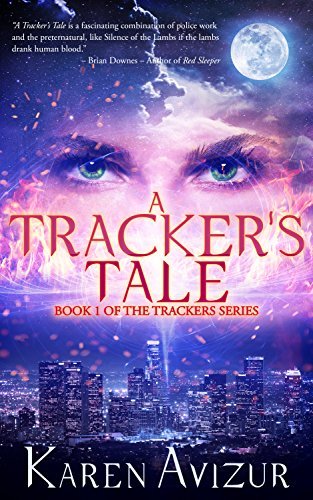
In A Tracker’s Tale, Karen Avizur introduces readers to Katherine Colebrook, an FBI agent working in the elite Trackers Division — a unit specializing in paranormal crimes. Katherine isn’t your average agent; she possesses psychic abilities that make her uniquely suited to track down parasapien criminals and assist law enforcement in navigating supernatural threats.
As a single mother raising a teenage daughter who shares her psychic gift, Katherine’s life is already complex. But things take a darker turn when she receives a call about a troubled young girl recently admitted to a psychiatric facility. The girl, traumatized by the loss of her brother to a sinister figure still at large, forms a bond with Katherine — one that pulls the agent deeper into a dangerous mystery.
With threats mounting and secrets unraveling, Katherine must use every skill she has to protect the girl — and herself — from forces that won’t stay hidden for long. But with the girl’s abilities attracting unwanted attention, one thing becomes clear: this won’t be the last time she’s in danger.
about the characters
Katherine is a compelling lead — a powerful psychic with the ability to cast spells and engage in combat, thanks to her extensive training. As part of the Tracker’s Division, she’s tasked with maintaining peace between humans and parasapien species such as vampires, werewolves, and other psychics in the area. It’s a delicate balance, but Avizur portrays Katherine as a grounded and capable heroine who navigates this complex world with confidence. Though she prefers to keep to herself, Katherine has cultivated global connections that prove invaluable during investigations. Her reputation within the community is one of fairness and understanding, despite a painful past marked by a violent parasapien encounter. Smart, fiercely protective of her daughter, and unafraid to face danger head-on, Katherine is both admirable and relatable — especially in her moments of fear and vulnerability.
Alexandra, Katherine’s daughter, is a strong and dynamic second lead. Trained in martial arts and other self-defense disciplines, she is well-prepared to protect herself when her mother is away on duty. A thoughtful and intelligent teenager, Alexandra finds comfort in books and spends much of her time at the library. Her psychic abilities come with their own burdens — particularly her inability to ignore the visions of people in danger. Like her mother, she feels compelled to help, even when it puts her at risk. One of Alexandra’s most striking qualities is her conviction: she’s not afraid to speak her mind, even in the face of opposition. This courage sometimes lands her in trouble, but it also earns her allies and allows her to navigate dangerous situations with surprising maturity.
Then there’s Rebecca, the third major figure in the story. Left vulnerable after the death of her brother — her only protector — she is institutionalized and surrounded by people she doesn’t know if she can trust. Living with a disability that has been exploited by others for criminal gain, Rebecca is a tragic yet inspiring character. Highly intelligent and a skilled hacker, she demonstrates a sharp resourcefulness beyond her years. Like Alexandra, her talents draw both trouble and opportunity, positioning her as a key player in the events that unfold.
Together, these three women form the heart of the story. Their combined strengths, emotional depth, and unique skills create a fast-paced, character-driven narrative that keeps the reader engaged from start to finish.
standout moments
One moment that resonated deeply with me was a scene in which Alexandra visits the library and notices a sign inviting patrons to a session on parasapiens. This scene marks a pivotal moment in the story, revealing that the general human population is not only aware of the supernatural but also lives with a sense of fear and misunderstanding surrounding it. The session is designed as an educational introduction for those curious — or cautious — about parasapien existence, offering a rare glimpse into the community’s effort to bridge the divide between species.
Alexandra, drawn by both curiosity and purpose, attends the session and is greeted by a woman from the supernatural community. As discussions unfold, it becomes clear that fear-driven prejudice still runs deep. When a speaker begins making sweeping accusations against parasapiens, Alexandra feels compelled to speak up. Her response highlights an important theme: danger does not stem solely from supernatural abilities — it can come from anyone, regardless of their species, if given the wrong motive and means.
This moment stood out for its striking parallel to real-world issues. The fear of those who are different — often fueled by ignorance rather than understanding — is a theme that continues to shape our world. By weaving this into her narrative, Avizur adds a bold and thoughtful layer to the story. It deepens the reader’s connection not only to the characters, but also to the social commentary that reinforces their struggles. It’s a reminder that fiction often holds a mirror to reality, and this scene does so with nuance and heart.
Another scene that left a strong impression was Katherine’s collaboration with a local werewolf alpha to track down a runaway from her pack — a young werewolf still struggling to control his transformation. Both leaders approach the situation with hope: that the boy hasn’t harmed anyone and that he can be safely returned without incident. Yet there’s a quiet tension between them, an unspoken understanding that if things go wrong, they must uphold the laws that protect both human and parasapien life. Their commitment to maintaining that balance — even when personal emotions are involved — reinforces one of the book’s most compelling themes: justice must be fair and unbiased across species.
The forest is quiet, but alive. The wind rustles gently through the brush around him and strokes his fur, bringing him the scents of the territory. The smell of the pack is long gone. He gathers instead the smell of others, the prey. The rabbit, the deer, the fox. He runs. The forest is his territory. All of it. He rules over the acres with strength that can take down anything in his path. His paws hit the ground rhythmically and propel him forward with a graceful strength, leaping over fallen trees and easily descending or ascending steep hills. Coming to an abrupt halt, he catches a scent. A meal cooked by humans. It’s burnt flesh, but its prey that has been caught and slaughtered for him already.
The alpha herself is a standout character. Though her role in the story is brief, she is written with such emotional depth that she lingers in the reader’s mind. Intelligent, grounded, and unwavering in her ethical stance, she exudes quiet strength. Yet beneath her calm exterior is a palpable weight of worry and guilt — not just for the missing youth, but for the burden of leadership and the consequences of failure. Her presence, while fleeting, was magnetic. I found myself instantly drawn to her and genuinely wishing we could have seen more of her story unfold. Avizur’s ability to introduce such a nuanced character in a short span speaks volumes about her character work, and it adds further richness to an already layered narrative.
personal reflection
A Tracker’s Tale is the first installment in the Tracker series and serves as a strong introduction to the life of Katherine Colebrook and the supporting characters who shape her world. Avizur demonstrates real strength in character development — the cast is relatable, dynamic, and emotionally complex. Each character brings a sense of humanity and vulnerability that helps ground the fast-paced, supernatural storyline.
The pacing of the novel is quick, driven by an action-packed plot that maintains momentum from beginning to end. While this makes for an engaging and accessible read, it occasionally leaves little room for deeper exploration into world-building. I found myself wondering how Katherine was able to implement her plan with Rebecca so seamlessly, or what the formal procedures were for initiating investigations — particularly given the number of unexplained or collateral deaths that occur throughout the story. These procedural gaps impacted the story’s realism for me, though they didn’t significantly detract from the overall enjoyment of the narrative. It’s also worth noting that the writing is clean, with minimal grammatical or spelling errors, allowing the story’s creativity to shine through.
final thoughts
I would recommend A Tracker’s Tale to readers who enjoy fantasy, magical realism, or supernatural fiction. With elements of vampire and werewolf lore woven into a framework of psychic abilities and human law enforcement, the story strikes a satisfying balance between magic and procedural intrigue. It never leans too heavily in favor of one species or perspective, which gives Katherine’s caseload — and her decisions — a strong sense of fairness and integrity.
Overall, I’m giving this book 4 out of 5 stars. It’s a compelling start to what I expect will be an exciting series, and I’m looking forward to seeing how Katherine’s world — and her responsibilities within it — continue to evolve.


 Turning Another Page
Leave a comment