
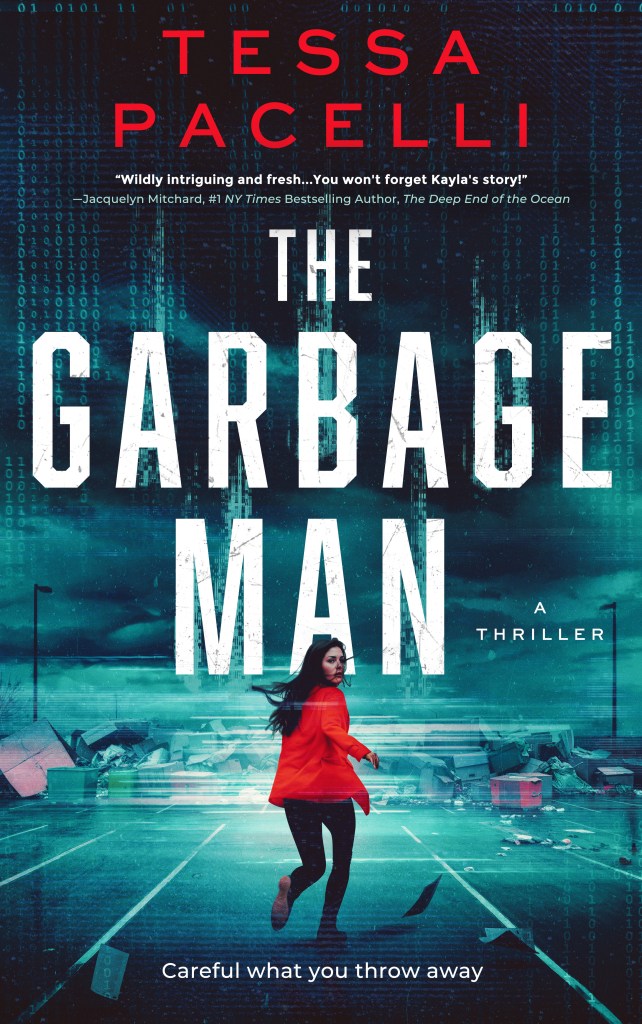
Kayla Mousavi is a recent graduate with a sharp mind, a steady poker face, and a wicked passion for the game. But skill at the table can only take her so far when the stakes move beyond chips and into real life. With her father incarcerated and buried under dangerous debts, Kayla is forced to take chances she never intended, sitting across from players who don’t lose gracefully and don’t forgive easily.
Those risks lead her directly to Frederick Douglass Monahan, a powerful and calculating figure who sees Kayla not as a liability, but as an asset. Monahan offers to erase her father’s debts, and provide far more than she ever imagined, in exchange for her coming to work for his recycling company. What appears to be a lifeline quickly reveals itself as something far more dangerous. His company is a sprawling conglomerate with influence that extends well beyond its public face, and accepting his offer pulls Kayla into a world where every move is monitored and every mistake carries a cost.
As Kayla becomes entangled in Monahan’s orbit, a single lost poker game triggers a rapid and brutal descent. The consequences spiral into a landscape shaped by artificial intelligence, relentless action, and constant unease, where trust is scarce and loyalty is manufactured. Monahan is both the beginning of her trouble and the force that keeps her trapped, an enemy with the power to move mountains, the money to fund terrifying technology, and the vision to weaponize it. This is the name of the game, and Kayla’s survival depends on how long she can stay one step ahead.
about the characters
Kayla Mousavi is intelligent, observant, and confident in her ability to outplay almost anyone at the poker table. That confidence, however, borders on naivety. When she learns she can be outmatched, especially by those who rely on persuasion and power rather than skill, her sense of control begins to fracture. As her gambling addiction tightens its grip, Kayla risks losing the man who loves her but cannot compete with her choices. This vulnerability makes her more accessible as a protagonist. Her flaws are deeply human, rooted in pride, fear, and the belief that determination alone can fix everything.
Much of Kayla’s motivation is driven by her desire to save her father, though their relationship is only lightly explored. I found myself wishing for more depth here, as a fuller understanding of their bond would have strengthened my emotional connection to her decisions. The same is true of her romantic relationship, which enters and exits her life quickly despite her deep attachment. While these relationships lack development, they reinforce Kayla’s impulsiveness and emotional vulnerability in a way that feels consistent with her character.
Frederick Douglass Monahan serves as the story’s primary antagonist—the enemy, the architect of the chaos, and the “garbage man” for reasons that become clear as the narrative unfolds. Though he is responsible for a staggering list of actions, including murder, dumpster diving, and pouring exorbitant amounts of money into artificial intelligence, he remains largely off-page. Operating from the shadows, Monahan is always felt but rarely seen, a puppeteer shaping outcomes without stepping fully into the light. This distance is both effective and frustrating. His power is undeniable, yet his limited presence left me wanting more insight into his motivations and inner workings.
Several supporting characters stood out despite limited development. Vapor, in particular, felt intriguing and underexplored, while Miles and Houdini, though on opposing sides, were memorable and likable. Each played a meaningful role in Kayla’s journey, but their storylines felt incomplete. Greater attention to these characters could have strengthened both the emotional weight and the overall cohesion of the narrative.
standout moments
One of the most memorable scenes takes place in broad daylight at a safe deposit box location—an intentional contrast to the secrecy and danger surrounding it. By this point, Kayla has already been rescued and moved through multiple layers of transportation, eventually arriving at an underground bunker that is as impressive as it is unsettling. The operation behind it involves spies and individuals determined to bring Monahan down for what he has created and how he is using it.
What makes this moment particularly compelling is the moral ambiguity layered into it. Those opposing Monahan claim they want to repurpose the technology for good, but from Kayla’s perspective, the promise of “better” feels just as frightening. The technology remains foreign and dangerous, and the idea that it can be responsibly controlled feels uncertain at best. That tension reinforces the sense that there are no truly safe sides to choose from.
A quieter but equally impactful moment unfolds inside the safe deposit area itself. As chaos erupts outside, Kayla realizes she is likely at the center of it. In that moment, a security guard steps in—not with suspicion or force, but with calm reassurance. He helps her leave the area, protecting her without question. In a story filled with manipulation and hidden agendas, this simple act of kindness stands out as one of the few moments of genuine trust and humanity.
personal reflection
From a conceptual standpoint, The Garbage Man is undeniably ambitious. The emergence of artificial intelligence, and the fear surrounding what it can do for us and to us, is already a part of everyday conversation. Pacelli weaves this concern into the story effectively, particularly through the use of virtual reality, allowing the threat of AI to feel immersive and unsettling. Information is revealed gradually, offering glimpses into how this technology can both harm and help society.
Where the story faltered for me was in credibility and emotional depth. While the characters feel authentic on the surface, their deeper motivations are not always fully supported. The novel is fast-paced and thrilling, but the world-building and settings sometimes lack the cohesion needed to make the stakes feel fully believable. Although it is realistic that individuals with immense money and power could create something as far-reaching as what is depicted here, the connective pieces did not always fit together in a grounded way.
From a technical standpoint, the writing quality is solid. Grammar and spelling issues are minimal, the structure is polished, and the dialogue is purposeful. The story follows a chronological, chapter-based format with generally consistent pacing, though some transitions felt abrupt and certain plot points underdeveloped.
Despite these shortcomings, relevance and impact are where the story shines. Pacelli delivers a suspenseful novel centered on a concept that resonates strongly with current societal concerns. The themes surrounding mass reliance on artificial intelligence, control, and unintended consequences mirror real-world conversations and leave a lasting impression.
final thoughts
The Garbage Man is a thought-provoking and suspenseful read that tackles a timely and important concept. While the execution did not fully land for me in terms of depth and cohesion, I appreciated what the author was attempting to convey. The caution surrounding power, technology, and control is a strong moral that lingers beyond the final page.
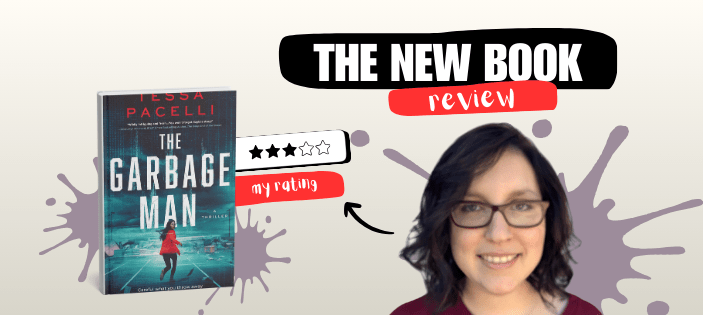
For readers interested in speculative thrillers that explore the darker possibilities of artificial intelligence and its growing role in society, this novel offers a compelling premise and moments of genuine tension. I ultimately rated The Garbage Man three stars. Thank you to NetGalley, Tessa Pacelli, and Zero Day Books, LLC for providing me with an advanced reader copy in exchange for my honest review.


 Turning Another Page
Leave a comment