
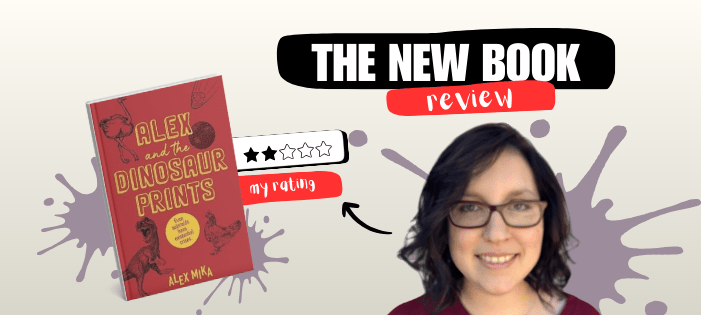

Alex and the Dinosaur Prints is a short work of creative non-fiction that strings together the author’s childhood memories with quirky facts about dinosaurs, the Great Emu War, and asteroids. Through these fragments, Alex Mika captures the way a child processes the world—mixing personal experiences with bits of learned knowledge. These subjects, according to Mika, were part of the essential toolkit for growing up, understanding surroundings, and making sense of life through assimilation.
The book hints at broader themes of growing up, making sense of the world, and seeking meaning. These ideas are present, but they are subtle and loosely connected. The playful, satirical tone keeps the reading light and entertaining, though it may overshadow the deeper emotional or philosophical threads for some readers.
structure & author’s perspective
The story mixes personal memories with fun facts about dinosaurs, the Great Emu War, and other oddities, all told in Mika’s playful, nostalgic voice. At the start, he mentions that some parts have been fictionalized “in varying degrees, for various purposes.” That doesn’t take it out of creative nonfiction—the heart of the book is still his real experiences, and the made-up bits just make the story more fun, funny, or clear. He also skips citations, which fits the casual, memory-driven style, though readers who like to check the facts might notice.
I began to feel the nihilism that sweeps over every five-year-old in such a moment, for Pluto was my favorite planet. Whatever happened to supporting the underdog? Nothing made sense! Pluto is dead, and we killed him! In that 2006 IAU conference, Pluto was reclassified as a ‘dwarf planet,’ which is essentially a consolation prize for large asteroids and other space rocks. I wonder if Pluto will one day set its sights on our presumptuous little planet and take its revenge.
This excerpt showcases Mika’s humor, nostalgic tone, and ability to magnify a childhood reaction into a playful cosmic reflection.
personal reflection & final thoughts
Rating: ★★☆☆☆ (2/5)
The book’s blend of memory and factual commentary captures the curiosity and wonder of childhood, and Mika’s humor and nostalgia make the story engaging and entertaining. Some sections may not be suitable for younger readers, and a few vocabulary choices feel more complex than the overall tone, slightly affecting pacing. I so wanted to give this one a higher rating because its originality, creativity, and whimsical trip down memory lane are genuinely charming. However, the lack of citations for less common facts, occasional forced vocabulary, sporadic shifts in subject matter, and the subtle connection to its suggested deeper themes kept it from fully resonating with me. That said, Mika’s humor and playful perspective offer a unique reading experience that many readers may enjoy.
This story will appeal most to readers who enjoy creative non-fiction that prioritizes voice and personality over strict accuracy or linear structure. I received a physical copy of this book from the author in exchange for my honest opinion.


 Turning Another Page
Leave a comment