
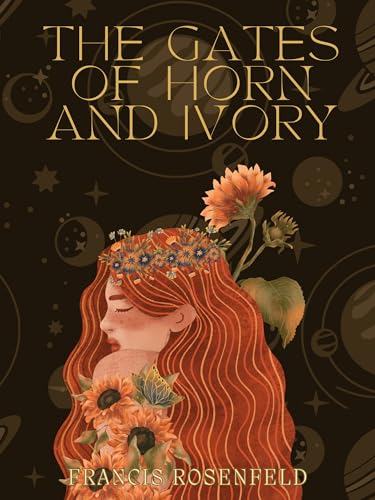
The Gates of Horn and Ivory is a captivating retelling of the Greek goddess Persephone’s myth, narrated from her own perspective. This immersive story explores her life divided between two realms—Mount Olympus with her mother, Demeter, and the Underworld with her husband, Hades.
As the narrative unfolds, Persephone reflects on her many names and roles throughout the centuries: goddess of agriculture, fertility, queen of the Underworld, harbinger of the seasons, guide of souls, and symbol of rebirth. Her journey is one of duality—both powerful and painful—as she navigates the weight of divine duty and personal desire.
This retelling shines with emotional depth, offering a story that is as heartbreaking as it is enlightening. The Gates of Horn and Ivory invites readers to see Persephone not just as a figure of myth, but as a woman shaped by sacrifice, strength, and eternal transformation.
about the characters
Since this story is told from Persephone’s point of view, she naturally takes center stage. The author does a remarkable job bringing this goddess to life—balancing moments of divine power with human vulnerability. Persephone moves through her duties almost mechanically, burdened by a relentless schedule, yet this retelling allows for moments of introspection that highlight both her strength and fragility. Her distaste for sacrificial rituals is made clear as she travels in service of the human populations who revere her, summoning her presence for festivals, births, and harvests. Despite her weariness, she expresses gratitude for their devotion and belief in her power to heal, protect, and restore. Her strength is especially evident when faced with the pettiness and politics of Olympus. The retaliations among gods and goddesses often brings reckless suffering to mortals, and the author captures these dynamics with a firm grasp of mythological nuance. Persephone’s personal doubt struck a chord with me—her journey leads her to question what she once accepted as absolute truth, especially in places like the dreamscape beyond the Gates of Horn and Ivory and the Hall of Scrolls.
Hades is, without question, one of the most compelling figures in Greek mythology—and a standout in this novel. His role as ruler of the Underworld is weighty and isolating, yet his love for Persephone is unwavering. While the Olympians are often portrayed as arrogant or volatile, Hades feels grounded, compassionate, and emotionally constant. Through Persephone’s eyes, he is the ideal partner—deeply invested in her well-being. His sorrow when she departs for the living world is palpable, underscoring a poignant theme: even immortals are not exempt from the constraints of time and longing.
One of the most admirable supporting characters is Hecate. Unlike the other gods and goddesses who demand something from Persephone, Hecate offers her sanctuary and space to be wholly herself. Though Hades voices concern over Hecate’s dark influence, even he cannot deny how Persephone’s vibrancy is amplified in her presence. Their bond is one of quiet empowerment and mutual understanding.
The other gods and goddesses are mostly cast in a harsher light. As Persephone journeys between realms, she encounters each with a sense of obligation: she transports souls for Dionysus, serves as Demeter’s devoted daughter during the harvest, mediates among Aphrodite, Athena, Artemis, and Hera, and offers justice and protection to the victims of Ares’s wrath. Her connection to Hades stands out as the singular light in this exhaustive cycle of service. The others leave her questioning her own purpose—especially when facing the Fates, negotiating new paths for lost souls. It’s emotionally and spiritually draining, yet hauntingly beautiful—a reflection of the eternal balance between life, death, and the divine.
standout moments
As someone deeply familiar with Greek mythology, many aspects of Persephone’s story were already known to me. However, there was one moment in this retelling that truly stood out and left me in awe.
The world was ugly without women, without their never ending patience, love and sacrifices. A brutal and gory succession of bloody deaths and battles, a place which would have made Tartarus look pleasant. All that ever happened in this world was a never ending fight for power and wealth, at any cost, accepting unspeakable sacrifices for its vain glory, somebody else’s sacrifices most of all, and nobody asked the women whether they agreed to any of them, because they were supposed to be quiet, obedient and not have opinions, hidden as they were behind their protective walls. Everywhere else, the world did not consult them in its pointless, repetitive drama of ambitions, greed and bloodthirsty ire, everywhere but here.
Persephone is called to attend an all-women’s festival—a sacred gathering that honors feminine strength, autonomy, and spiritual connection. What made this scene so impactful was how it reimagined ancient ritual through a modern lens. The women’s unrestrained joy, the freedom of their movements, and the bold ownership of their bodies created a space that felt both timeless and revolutionary.
In traditional mythology, narratives are often male-dominated, with female voices and experiences subdued or filtered through a patriarchal lens. Here, however, the author grants these women a moment of liberation, observed through Persephone’s respectful and almost reverent gaze. It was a celebration of power, agency, and community—free from the scrutiny and expectations of men. This scene not only enriched Persephone’s character but brought a fresh, empowering dimension to the myth itself.
personal reflection
The Gates of Horn and Ivory maintains a steady, deliberate pace throughout much of the story, as the author richly details the history and context surrounding everything Persephone sees, experiences, and does. While this level of immersion is often appreciated in mythology retellings, there were moments where the prose became overly descriptive. At times, I found myself rereading certain passages to fully grasp their meaning, as the heavy emphasis on detail occasionally muddled the message.
In addition, there were instances of inconsistency in tone and writing style that made it feel, at times, as though multiple voices had contributed to the narrative. Grammatical errors were noticeable, though not frequent enough to detract significantly from the overall readability.
Despite these flaws, Rosenfeld handles mythological references and divine politics with poise and tact. The inclusion of footnotes adds a valuable layer of insight for readers interested in exploring the historical and mythological origins further. This scholarly touch enriches the reading experience and grounds Persephone’s personal journey in a broader context.
Overall, this story is both entertaining and educational. While some elements may be embellished through Persephone’s perspective, the narrative remains rooted in recognizable myth. I would recommend The Gates of Horn and Ivory to readers who enjoy mythology, folklore, and historical fiction. The character development is strong, especially in its exploration of the flawed and often contradictory nature of the gods, which adds a layer of relatability to these immortal figures.
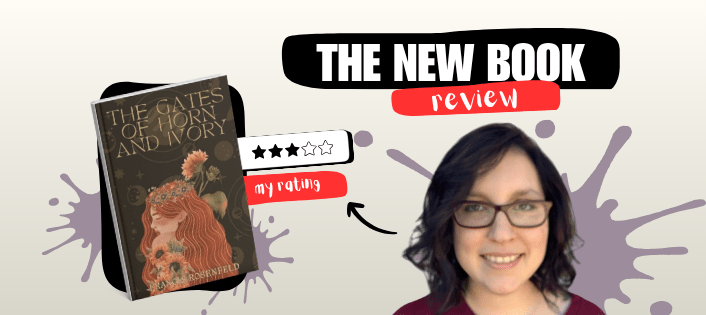
An electronic copy of this book was provided to Turning Another Page by Reedsy Discovery and in no way affects the honesty of this review. I’m giving The Gates of Horn and Ivory a solid three-star rating. While the story is thought-provoking and immersive, I found myself wishing for a smoother, more accessible reading experience.


 Turning Another Page
Leave a comment