
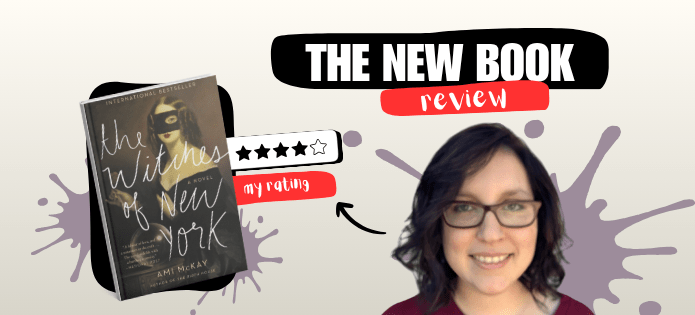
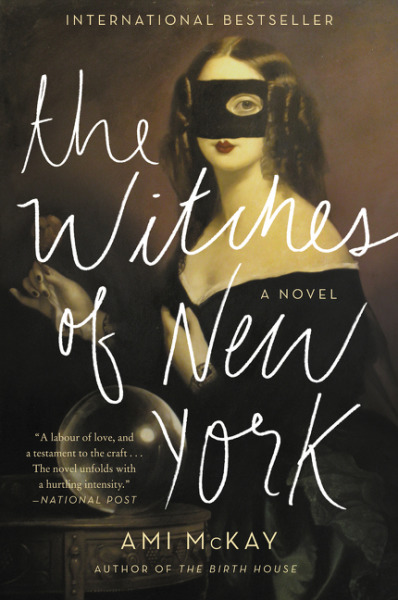

Set in the vibrant and mysterious world of 1880s New York, The Witches of New York follows Adelaide Thom and Eleanor St. Clair, two women who run a discreet teashop offering spiritual guidance and arcane services to society’s curious elite. When seventeen-year-old Beatrice Dunn joins them as an assistant, her untapped supernatural gifts begin to surface—thrusting her into a world of magic, danger, and self-discovery amid a city enthralled by both science and mysticism.
about the characters
My favorite character in The Witches of New York is Eleanor St. Clair. Calm, collected, and wise, she stands in contrast to Adelaide’s more erratic and brash nature. Eleanor carries a quiet sadness that draws the reader in—you’re compelled to uncover her past, especially when mysterious details, like the presence of her talking raven, Perdu, begin to unfold. When Beatrice arrives seeking employment, Eleanor quickly recognizes her potential and welcomes her, though she quietly wonders how Adelaide will react to a new presence in their shared space. Amusingly, the dynamic shifts when Adelaide unexpectedly adopts a stray dog from a neighboring business, showcasing their contrasting but complementary temperaments.
One of Eleanor’s greatest strengths is her unshakable composure—even in the face of danger. Both she and Adelaide bear the scars of difficult pasts and navigate a world that remains skeptical, if not hostile, toward women in their profession. Eleanor appears to be more deeply rooted in magical traditions than Adelaide; she protects the shop through spells and wards, and maintains a personal grimoire, which Beatrice discovers early on. Her quiet power, intellectual depth, and emotional restraint make her a compelling figure throughout the novel.
Adelaide could hear Eleanor still shuffling about downstairs, muttering under her breath. She couldn’t tell if her friend’s grumbling was in response to Perdu or just a symptom of being overworked. Had she pushed too hard too soon for their business to be a success? Was furnishing the place with “mystical touches” or putting a tasteful sign in the window too much to ask? Eleanor, in her perpetually wish fashion, always erred on the side of taking things slowly, waiting for signs, proceeding with caution. Adelaide tended to be brash and single-minded. Detractors, naysayers, the landlord, even the police could be dealt with quickly and efficiently, with sweet smiles, greased palms, or other wiles if need be. To date, she’d seen no trouble brewing (other than the prim, sour-faced woman who’d taken a fancy to standing for lengthy periods outside the shop—Adelaide was sure she was nothing but a harmless crank).
Adelaide, by contrast, is bold, sharp-witted, and emotionally intense—though she would likely deny the latter. She longs for love, even as she resists acknowledging it. She serves as the perfect yang to Eleanor’s yin. When Brody, a man introduced by the high-society client Judith Dashley, enters the scene, Adelaide becomes enthralled, uncertain how to navigate her conflicting emotions. Even amid threats and rising tension, she continues to wrestle with her feelings. Her past trauma, including the physical loss of an eye, underscores her emotional vulnerability beneath a strong and confident exterior. Despite the world’s resistance, both women have carved out lives of purpose and power—a core theme in the novel’s exploration of female resilience and autonomy.
The third central figure, Beatrice Dunn, is young, curious, and ready for transformation. Leaving her Aunt Lydia and a quiet village life behind, she ventures to New York in search of adventure. She is drawn to the teashop for reasons she doesn’t yet understand—namely, her latent spiritual gifts. Under the mentorship of Eleanor and Adelaide, as well as the scientifically-minded Dr. Quinn Brody, Beatrice begins to explore her abilities. Her journey culminates in a bold public demonstration that blends the supernatural with science, conducted before some of New York’s most elite citizens.
Two primary antagonists emerge early in the story: The Reverend and a shadowy figure known as Palsham. Both men, intertwined in their purpose, represent different but equally disturbing facets of evil, operating under false pretenses to manipulate and harm those around them. The Reverend cloaks his cruelty in religious fervor, targeting vulnerable young women under the guise of spiritual salvation. His so-called “redemptive” practices are, in truth, acts of psychological and physical torture meant to force conformity to his warped ideals. Palsham, by contrast, remains largely hidden from view, manipulating events from the shadows. He recruits and indoctrinates men into his service, turning them into instruments of violence to carry out his sinister agenda. While the Reverend’s horror is overt and sanctimonious, Palsham’s influence is insidious and far-reaching—both men reflecting the novel’s deeper commentary on power, fanaticism, and the systemic oppression of women.
standout moments
One particularly memorable and meaningful element in The Witches of New York is the inclusion of Cleopatra’s Needle—a real historical monument that adds both authenticity and symbolism to the story. Its presence is iconic and tastefully woven into the plot, grounding the magical realism in a tangible piece of history that readers can recognize and appreciate.
Cleopatra’s Needle is one of a pair of ancient Egyptian obelisks made of red granite, created in 1425 BCE in Heliopolis and originally commissioned by Pharaoh Thutmose III for the Temple of the Sun. Symbolizing eternity and the connection between heaven and earth, the obelisks were later transported by the Romans to Alexandria and placed at the entrance of a temple dedicated to Julius Caesar—constructed by Cleopatra herself. This association is one theory behind their enduring name. The Romans also added bronze crabs as supports for the damaged bases, reinforcing a connection to the sun god Apollo in Roman mythology and maintaining the monument’s solar symbolism1.
This rich historical backdrop makes Beatrice Dunn’s arrival in New York all the more evocative, as she enters the city with nothing but a witch’s ladder—crafted from hair—and a wish. The confluence of ancient magic and enduring stone sets the tone for her transformation and for the novel’s wider themes of feminine power, legacy, and spiritual resilience .
personal reflection
This story invites a profound question: Is there more to life than what we see? While many religions and belief systems offer their own answers, the deeper moral of this novel, in my view, centers on humanity’s long-standing failure to accept those with differing beliefs. It’s a theme that is both historically grounded and tragically relevant today. Across cultures and borders, the fear of what we do not understand continues to breed intolerance. Whether it be someone’s spiritual practices, worldview, or deeply held convictions, the inability to accept difference has led to wars, persecution, and the loss of entire communities. It is a truth that continues to scar humanity.
Ami McKay addresses these heavy themes with sensitivity and historical insight. She weaves her narrative with threads of truth, drawing from real events like the Salem witch trials to underscore the consequences of fear-driven ignorance. Her storytelling is not only engaging but purposeful. Her tone throughout the novel is thoughtful and immersive, balancing lyrical description with grounded realism. She addresses themes of persecution, identity, and empowerment with a respectful, almost reverent touch, never sensationalizing trauma but instead allowing the humanity of her characters to speak for itself. The pacing is well-measured—slow enough to develop character depth and world-building, yet steady enough to maintain intrigue and suspense.
McKay’s inclusion of real-world elements—such as Cleopatra’s Needle or references to the Salem witch trials—grounds the narrative in reality while allowing magic to exist organically within it. This blend of fact and fantasy enhances the novel’s overall impact and gives it a sense of timelessness. From a technical standpoint, the novel is polished and professionally executed. The spelling and grammar are consistently strong, and the prose is elegant without becoming overly ornate. The dialogue feels authentic, the descriptions vivid, and the atmosphere richly textured. In the book’s afterword, McKay shares how this story is deeply personal to her, revealing the ways in which her own understanding of history has been shaped by the subjects she explores. That level of authorial vulnerability and reflection, in my opinion, elevates the book—making it not only a compelling read but also a meaningful one.
This story is a rich blend of historical fiction, magical realism, and paranormal fantasy, offering readers an immersive journey into a version of 1880s New York that feels both grounded in history and touched by enchantment. The novel gracefully explores themes of belief, identity, and the resilience of women in the face of societal oppression. While some moments may feel slower paced, the depth of character development and vivid world-building more than make up for it. This book left a lasting impression on me—not just because of its imaginative storytelling, but because of its thoughtful commentary on tolerance, spirituality, and the power of feminine intuition. McKay’s attention to historical detail and her nuanced characters make this a standout in its genre. I’m giving The Witches of New York a solid four stars. It’s a compelling, atmospheric read that will appeal to fans of magical realism and historical fantasy alike, especially those who enjoy stories centered around strong, complex women navigating both mystical and societal challenges.
1(Central Park Conservancy. (n.d.). The Obelisk. https://www.centralparknyc.org/locations/obelisk)


 Turning Another Page
Leave a comment